
A deposition transcript tells you what a witness said. It does not tell you how long they sat there before
saying it, or their inflection when they finally answered. For trial lawyers, that gap is where cases are
won.
We sat down with S. Randall “Randy” Hood, founding partner at McGowan, Hood, Felder & Phillips, to
talk about how to best leverage video testimony in trial. Randy has spent 35 years in catastrophic injury
and medical malpractice litigation and has helped secure more than $2 billion in verdicts and
settlements. He has been videotaping depositions since the 1990s, back when using a clip at trial meant
physically cutting tape.
“I just videotape everything,” he told us. “Always have since the 90s and always will as long as I
practice.”
Here is what he had to say
Why Video Testimony Matters
Before we get tactical, why does video matter at all?
For Randy, it comes down to three things, and the first is behavioral.
“I think it keeps people from lying,” he said. “People, when they’re on video, realize, if I do this and I’m
caught, it’s bad, because they got me saying it. There’s no plausible deniability.” On video, a witness
cannot later claim they were misquoted or taken out of context. “It helps create credibility. It helps
create truthfulness.”
The second reason is that video keeps everyone in the room honest, opposing counsel included. When a
defense lawyer starts acting up, Randy wants a record of it, and he has put a second camera on the
defense side of the table to get one.
The third reason is efficiency. “My video depositions never take as long as my question-and-answer
depositions,” he said. “It almost forces you to distill everything.” Knowing an answer may be played back
for a jury pushes him toward tighter questions, which shortens the deposition and sharpens what comes
out of it.
Can you point to a moment where video changed how a jury reads a witness?
Randy describes the witness who arrives at trial composed, coached, and unrecognizable from the
person he deposed.
“What the jury is seeing is just an image. It isn’t a reality,” he said. “When you can show the reality,
sometimes it completely dings their credibility.” A clip of that same witness fidgeting or hesitating
introduces a version of the person the jury has not met.
The damage is rarely about one admission. Once jurors doubt that a witness is being straight with them,
every other answer carries less weight, which is how a single clip can undo hours of polished testimony.
Building the Record
How early should trial teams begin organizing video testimony?
“I’ve already organized my video testimony before I’ve ever asked the first question,” he said.
The idea Randy returned to more than any other is front-loading, meaning putting your most important
admissions at the very beginning of the deposition rather than wherever the outline happens to take
you. Part of the reason is the jury. “Jurors have a tendency to discount after about 15 minutes,” he said.
“They get tired. They want to see the fireworks up front, because they get bored. Watching stilted video
in a courtroom puts people to sleep.” He keeps a designation under 20 minutes for that reason. A
designation played in his case in chief is evidence rather than argument, so a jury that has tuned out will
miss the admission when it arrives.
The other reason is procedural, he pointed out. Opposing counsel gets to designate their own excerpts,
and they are not limited to responding to yours, so testimony that surfaces late is easier for them to
reframe. “If you don’t cover everything in the first 10 minutes of your deposition, I think you’re doing a
disservice to your ability to use it at trial in an effective manner.” Waiting until the middle of a
deposition to make your point costs leverage that cannot be recovered later.
What does front loading look like in practice?
He calls it a consequence deposition. He walks the witness through what happened in plain, unarguable
terms: the witness was driving west on Ashley Street that morning, there was a crash, and the client did
not survive.
“You haven’t committed anybody to anything,” he explained. “They just know the consequence. So,
when you play that deposition, the jury knows in the first minute or two minutes, there was a crash,
your client died.” None of it requires hostility. “You can surgically take somebody apart in a very nice,
respectful manner.”
Jurors who sense a witness is being bullied tend to side with the witness, so the goal is a record that
establishes the stakes without giving anyone a reason to resent the lawyer asking.
What is your process for finding the clips worth using?
Randy doesn’t spend hours scrubbing footage, and he doesn’t think anyone should have to. When a
witness hesitates, fidgets, or visibly comes apart, he flags that moment in real time with Remote Legal
so it can be found later without hunting through the whole record.
“You’re not going to see someone pause for two minutes on the transcript. It’s not going to show,” he
said.
He has the war stories to go with it. A doctor once stood up mid-deposition, shouted that Randy did not
know what he was doing, and refused to answer questions about his financials. “We had just come back
on, and I literally told video, get it, get it, get it.” The witness had been the linchpin of the defense case,
and they had to pull him.
Practical Advice for Trial Teams
What would you say to firms that only videotape the depositions they expect to matter?
That the approach depends on knowing something nobody knows.
“The mundane may turn out to be the star,” he said. “It may turn out to be the thing that breaks
everything. There is something that happens in every deposition I take that is unexpected.”
For small cases with a tight budget, the cost of a few depositions can eat into the recovery. However, for
catastrophic injury work like his own firm’s, he treats video as part of the cost of handling the case
rather than an add-on to weigh each time. “In my opinion, it’s legal malpractice not to tape everything.”
Why not just read the transcript?
An enthusiastic yes and a reluctant one are worlds apart in the room and identical on a page.
“On the paper, it’s the exact same,” Randy said. “But on video, it means two completely different things.
You don’t have the context and the flavor without seeing and hearing the answer.” That distinction
disappears when a judge’s law clerk reads a designation aloud in court. “There’s absolutely zero
inflection or emotion.”
For a jury deciding who to believe, tone often carries more than the words do. A transcript captures a
hesitant answer and a confident one identically, so the record can be complete and still lose what would
have changed the case completely.
If you could give one piece of advice to attorneys preparing for trial tomorrow, what would it be?
“Front load your depositions. Just front load it.”
Everything traced back to that. “You’ve got to go in with a plan,” Randy said. “You’ve got to go in
knowing where you intend for it to happen.” The plan matters more than the equipment, since a camera
only preserves what the questioning managed to produce.
After 35 years, his answers kept circling the same idea. Video doesn’t win a case on its own, though it
does make sure nothing worth having gets lost. The trial teams who get the most from it are the ones
who decide what they need before the record ever starts.
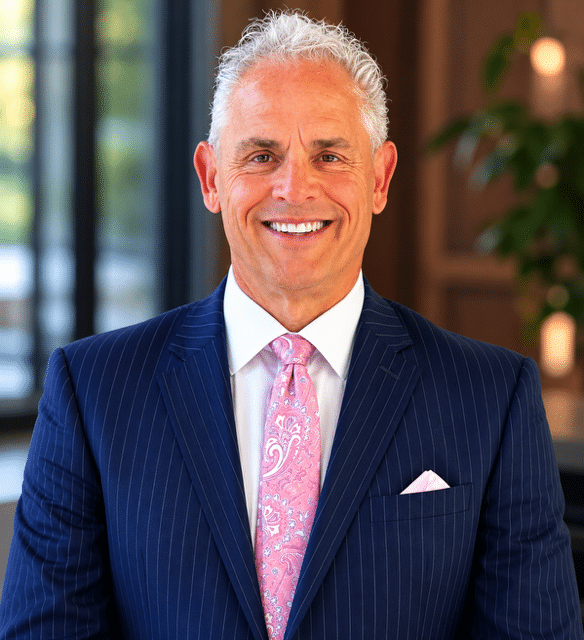
Randy Hood
S. Randall “Randy” Hood is a founding partner at McGowan, Hood, Felder & Phillips, LLC, a South Carolina plaintiff’s firm concentrating in catastrophic injury, medical malpractice, and corporate wrongdoing litigation. Over a 35-year career devoted entirely to litigation, Randy has helped secure more than $2 billion in verdicts and settlements for injured clients, including the landmark $88 million Charleston Nine settlement, believed to be the largest civil rights settlement for individual claims in U.S. history. He is certified as a specialist in Medical Malpractice Law by the American Board of Professional Liability, is a past president of the South Carolina Association for Justice, and has been named to the South Carolina Super Lawyers list for 16 consecutive years. His professional memberships include the American Board of Trial Advocates (ABOTA), the American Association for Justice — including its Birth Trauma Litigation Group — the Southern Trial Lawyers Association, and the Melvin Belli Society. Randy is also the co-founder of Jury Edge, an AI-powered litigation intelligence platform designed by trial lawyers for plaintiff trial lawyers. He is a frequent lecturer at state and national trial lawyer associations on trial advocacy, case framing, and the application of artificial intelligence to plaintiff’s practice.